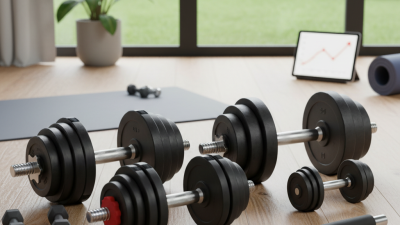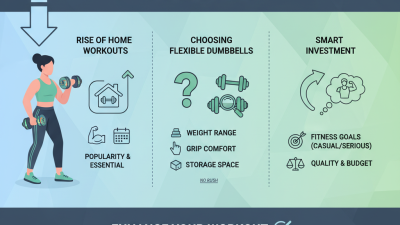
Portable Dumbbells are compact strength-training tools designed for homes, travel bags, and limited workout spaces. Unlike fixed weights, many models use adjustable plates, selector pins, or twist-lock systems. These mechanisms change resistance without requiring a full rack of equipment.
A small handle may become a 5-pound weight. Add plates, and it can challenge your legs, back, chest, or shoulders. The change happens through a simple balance between load, grip, and controlled movement. Some designs use water or sand instead of metal. They are convenient, but their feel may differ during fast exercises.
“The goal of resistance training is progressive overload,” explains Dr. Brad Schoenfeld, a respected researcher in muscle growth and strength training. This principle also applies to Portable Dumbbells. Muscles need gradually increasing demands, not random weight changes. A heavier setting can help, but better control and additional repetitions matter too.
They save space.
However, portability does not guarantee quality. Loose adjustment parts can interrupt a set. Cheap handles may feel rough after several minutes. A compact design may also limit the maximum load, especially for experienced lifters. These weaknesses deserve attention.
This guide examines what Portable Dumbbells are, how their adjustment systems work, and where they fit into practical training. It also considers storage, safety, grip comfort, and long-term value. The most useful option may not be the heaviest one. It may be the set you can adjust quickly and use consistently beside your sofa, desk, or hotel bed.
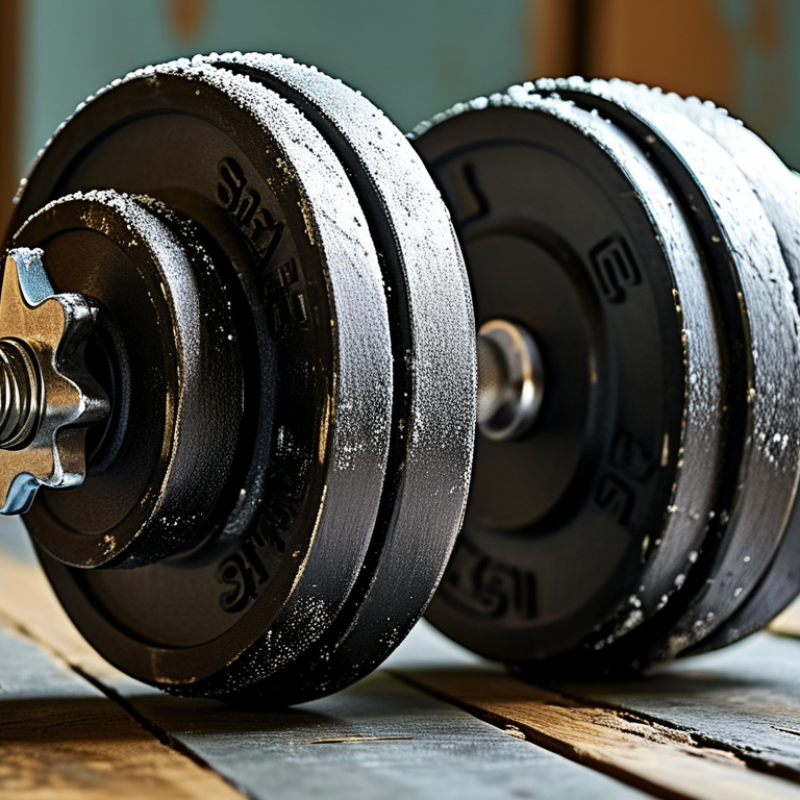
Portable dumbbells are compact strength-training tools designed for limited spaces and changing workout needs. Each handle connects with removable weight plates or a built-in adjustment system. By turning a selector, sliding a pin, or adding plates, users can change the load from 2 to 24 kg. This range suits light rehabilitation exercises, controlled shoulder raises, and demanding lower-body movements.
The main advantage is simple storage. One adjustable dumbbell can replace several fixed pairs, leaving more floor space beside a bed or desk. In my experience, the adjustment mechanism matters as much as the weight range. A loose selector can interrupt a set, while secure locking parts keep the plates stable during curls or presses.
Always check the locking system before lifting.
Start with a manageable load. Good form matters more than reaching 24 kg quickly. The handle should feel balanced, and the plates should not shift when you rotate your wrist. Portable equipment is convenient, but it is not perfect.
Some models feel bulky at lighter settings, and quick adjustments may require both hands. I have also found that users sometimes increase weight too fast because the higher setting is immediately available. A slower progression is usually easier to control, especially when training alone on a narrow floor area.
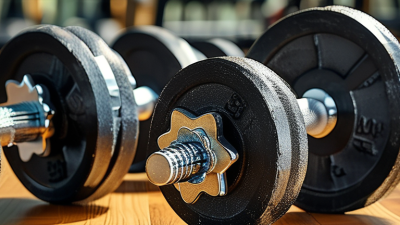
Portable dumbbells are compact resistance tools designed for small spaces, travel, and quick weight changes. Their main handle usually contains a textured grip, threaded ends, or a central loading channel. Plates slide onto the handle and create the actual resistance. Some plates are cast metal, while others use coated materials for quieter floor contact.
The selector controls how many plates move with the handle. A dial, pin, or sliding mechanism chooses the load. Locks hold the plates firmly during curls, presses, and rows. A reliable lock should resist rotation and remain secure after repeated movement. Weight-change mechanisms differ. Threaded systems require manual tightening, while selector systems release unwanted plates when the dumbbell is lifted. The process feels simple. The engineering is not.
The American College of Sports Medicine’s 2024 Worldwide Survey ranked traditional strength training fifth among global fitness trends. That result supports continued interest in practical resistance equipment. Grand View Research has also projected strong growth for the home fitness equipment market through 2030, although market estimates vary by region and product definition. My first assumption was that heavier plates automatically mean better training. That is incomplete. A loose selector, narrow handle, or awkward plate transition can reduce control. Users should test the lock, inspect contact points, and confirm the selected weight before each set. Small details matter.
Portable dumbbells are compact weights designed for home workouts, travel, or small training spaces. Their handles usually connect to internal plates, sliding blocks, or a selector mechanism. Instead of lifting several separate dumbbells, you adjust one pair to match the exercise.
Load selection is the main advantage. Many portable models increase resistance in small steps, from 0.5 kg to 2.5 kg. A 0.5 kg change can make curls feel smoother, especially for beginners or recovery-focused sessions. Larger 2.5 kg increases suit stronger movements, such as squats or rows. The mechanism may use a dial, pin, or locking slider. The chosen number must align fully before lifting.
Small adjustments matter.
In practice, select a lighter load for shoulder raises and a heavier setting for deadlifts. Keep both dumbbells at the same resistance unless a professional gives you a specific reason not to. Check the markings before every set, and confirm that the plates are locked without movement. A loose selector can change the balance and reduce control.
I once treated a tiny increase as insignificant, but my form changed near the final repetitions. That was a useful reminder: progress should be measurable, not rushed.
The best setting is challenging while still allowing steady movement, controlled breathing, and a stable wrist. Examine the equipment regularly, because compact parts can wear faster when carried often.
Portable dumbbells are compact resistance tools designed for training at home, outdoors, or while traveling. Many use removable plates, sealed chambers, or adjustable loads. Their main advantage is simple: the weight moves with your hands, not along a fixed track.
Free-weight resistance depends on gravity and body position. During a curl, the biceps work hardest when the forearm becomes nearly horizontal. At the top, leverage changes, so the same dumbbell may feel easier. Presses, rows, and squats create different resistance patterns across the movement.
A full range of motion can train muscles through lengthened and shortened positions, but control matters more than forcing depth. Keep the wrist steady, move smoothly, and avoid swinging. Portable equipment also demands stabilizer activity because each hand must guide its own path.
I once assumed heavier weights always produced better results. That view was incomplete. Poor control can reduce useful tension and irritate a joint.
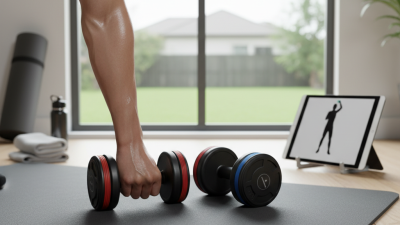
Portable dumbbells are compact resistance tools designed for training at home, outdoors, or while traveling. Some use adjustable plates, while others change resistance through internal mechanisms. The basic principle remains simple: your muscles work against external load. A secure handle, balanced weight, and controlled movement matter more than appearance.
For many healthy adults, ACSM guidance supports resistance training two to three times weekly. Space sessions across the week when possible. This allows recovery between workouts. A practical target is 8–12 repetitions per exercise. Choose a weight that makes the final repetitions challenging without damaging your technique. The last two repetitions should feel demanding. They should not become careless.
Try squats, rows, presses, and Romanian deadlifts with portable dumbbells. Keep your wrists neutral and lower each weight slowly. Rest about one to two minutes between sets, adjusting for fatigue and exercise difficulty. The 8–12 range is useful, not sacred. If you cannot reach eight clean repetitions, reduce the load. If twelve feels effortless, increase it slightly. Real sessions rarely look perfect. I would rather see steady control than rushed numbers. Beginners should record weight, repetitions, and discomfort after each session. Sharp pain is not a normal training signal. A qualified exercise professional can help modify movements, especially after injury or during medical treatment.
A practical comparison of portable dumbbell designs, adjustment methods, training uses, and general safety considerations
| Portable Dumbbell Type | How It Works | Typical Resistance Adjustment | Main Advantages | Important Limitations | Best-Suited Exercises |
|---|---|---|---|---|---|
| Adjustable Plate Dumbbells | Weight plates are added to or removed from a handle and secured with collars or threaded ends. | Usually adjusted in small plate increments; the exact range depends on the plate set. | Simple mechanical design, flexible loading, and easy-to-understand operation. | Changing the load can take longer, and loose plates may make the dumbbell longer or less balanced. | Chest presses, rows, squats, lunges, curls, and overhead presses. |
| Selectorized Adjustable Dumbbells | A dial, pin, lever, or selector engages a chosen number of internal weight elements while unused elements remain in the stand. | Adjusted by selecting a preset load; increments vary by design. | Fast weight changes and compact storage compared with a full rack of fixed dumbbells. | Moving parts require careful handling, and the selected mechanism should be fully engaged before lifting. | Strength circuits, supersets, full-body workouts, and home resistance training. |
| Water-Filled Dumbbells | Hollow handles or containers are filled with water to create resistance and emptied for transport. | Adjusted by changing the amount of water; the load is affected by the water volume. | Lightweight when empty, convenient for travel, and easy to store in limited spaces. | Resistance can shift as water moves, and the maximum load is generally lower than that of metal-based systems. | Light resistance work, conditioning circuits, mobility exercises, and travel workouts. |
| Sand-Filled Dumbbells | Containers are filled with sand or a similar granular material to create a portable training load. | Adjusted by adding or removing filling material, where the design permits. | Portable, relatively inexpensive to store, and useful where conventional weights are impractical. | Filling can be less convenient to change, and the load may feel uneven if the contents move. | General strength exercises, functional training, and low-impact conditioning. |
| Collapsible or Modular Dumbbells | Separate handles, connectors, or weight modules assemble into a dumbbell and may sometimes form other resistance-training configurations. | Adjusted by adding, removing, or rearranging modules. | Efficient for storage and transport, with multiple configuration options. | Assembly must be secure, and the connection points may require regular inspection. | Rows, presses, deadlifts, split squats, carries, and home gym routines. |
| Fixed Portable Dumbbells | A handle and weight heads form one permanent unit; no adjustment mechanism is required. | Resistance changes by switching to another dumbbell with a different fixed mass. | Quick to use, stable during movement, and generally straightforward to maintain. | A complete range of weights requires more storage space and may be less convenient for travel. | All standard dumbbell exercises, including presses, rows, raises, and curls. |
| Training Frequency | Portable dumbbells can support resistance-training sessions at home, while traveling, or in other suitable spaces. | ACSM general guidance: train major muscle groups at least 2 days per week; 2–3 weekly sessions are commonly used for a structured routine. | Regular scheduling can improve consistency and allow recovery between sessions. | Frequency should be adapted to training status, total workload, recovery, and medical considerations. | Full-body sessions or alternating upper-body and lower-body workouts. |
| Repetition Target | Load is selected so that the final repetitions are challenging while controlled technique is maintained. | A common strength-training target is 8–12 repetitions per set. | Provides a practical moderate-load range for many novice and intermediate resistance exercises. | The appropriate repetition range varies with the exercise, training goal, experience, and ability to maintain safe form. | Presses, rows, squats, lunges, curls, triceps extensions, and shoulder exercises. |
| Safety Check | The user secures plates, selectors, caps, connectors, or containers before each set and checks the equipment for damage. | Use a load that allows controlled movement through the intended range of motion. | Reduces the risk of dropped components, unexpected load changes, and loss of control. | Portable equipment should not be used if locking parts are loose, cracked, leaking, or visibly worn. | Every dumbbell exercise, especially overhead movements and exercises performed near the body. |
Training note: The 2–3 sessions per week and 8–12 repetitions guidance is a general framework, not a universal prescription. Beginners should prioritize technique, gradual progression, appropriate rest, and professional medical advice when relevant.