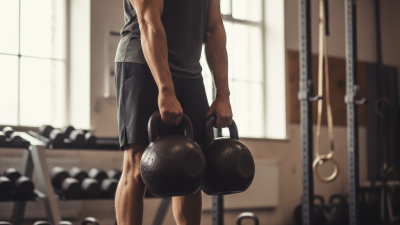
10 Essential Tips for Using Cast Iron Dumbbells Effectively
When it comes to strength training, "Cast Iron Dumbbells" are a classic choice for many fitness enthusiasts. Renowned expert Jack Thompson, a certified personal trainer, emphasizes their benefits: "The grip and balance of cast iron dumbbells provide unmatched stability and control during workouts."
Using these dumbbells effectively can transform your training routine. They add resistance to your exercises, making them more challenging. However, improper usage can lead to injuries or inefficiencies. Many beginners often overlook the importance of form, which can hinder progress and lead to frustration.
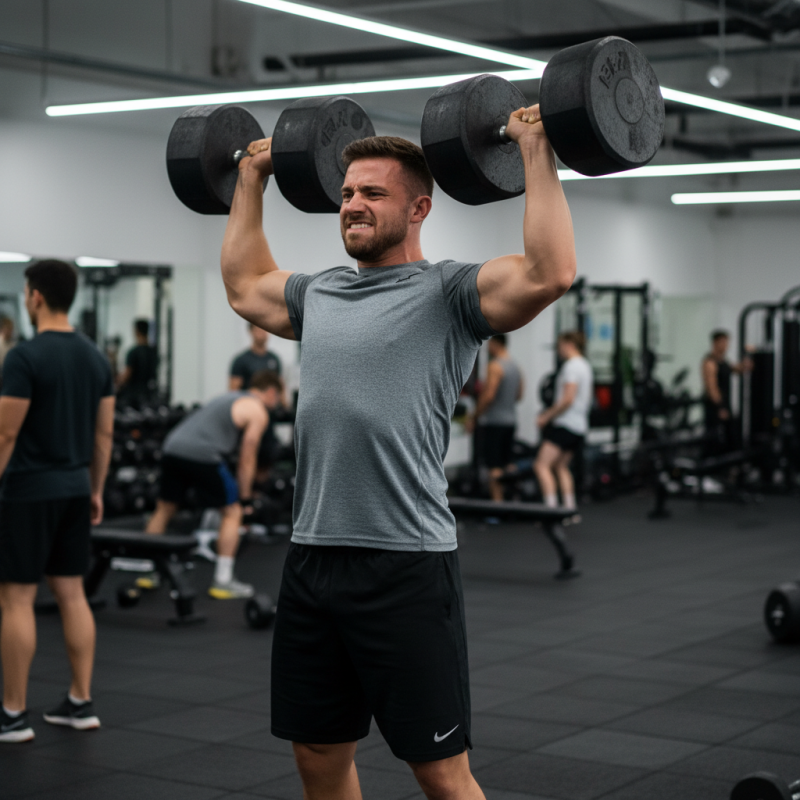
Picture this: you’re in the gym, attempting a shoulder press with cast iron dumbbells, but your grip slips and you lose balance. This scenario highlights the necessity of proper technique. Take a moment to assess your approach to ensure each lift is both safe and effective. Recognizing the unique challenges with "Cast Iron Dumbbells" can enhance your training experience. A thoughtful strategy is essential for making the most out of your workouts.
Understanding the Benefits of Cast Iron Dumbbells for Workouts
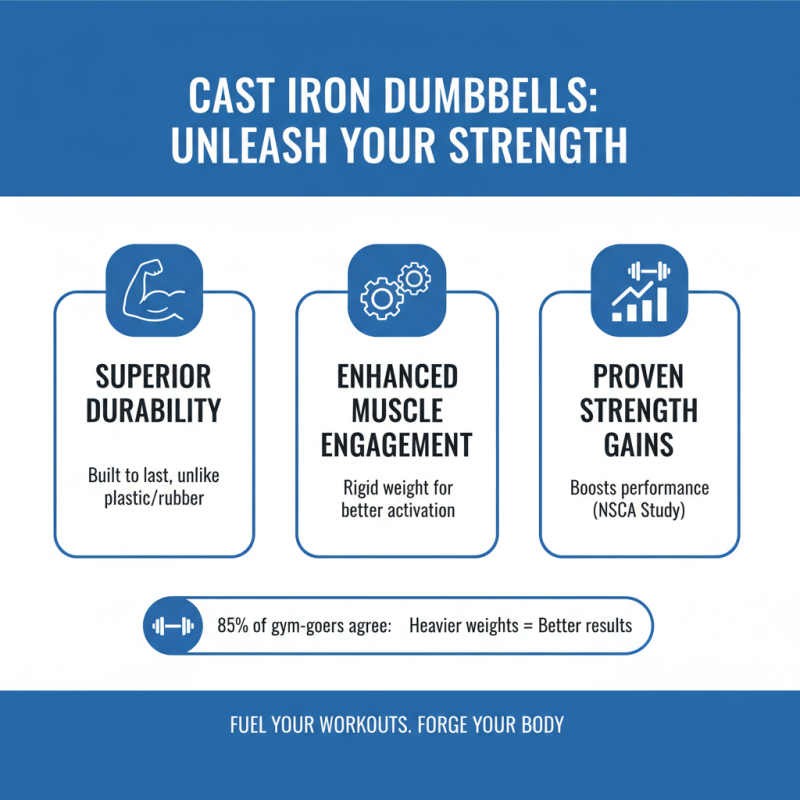
When considering workout equipment, cast iron dumbbells stand out for their durability and effectiveness. Unlike plastic or rubber, cast iron offers a rigid weight that promotes better muscle engagement. A study by the National Strength and Conditioning Association (NSCA) reveals that free weights, including dumbbells, can significantly enhance muscle strength. Roughly 85% of gym-goers find that using heavier weights leads to improved performance in strength training.
The benefits of cast iron dumbbells extend beyond strength. They provide a stable grip, which can lead to fewer injuries during workouts. In fact, many fitness professionals highlight the importance of grip strength in overall lifting performance. A report from the American Council on Exercise (ACE) indicates that grip strength is a vital indicator of overall body strength. Still, people must be cautious. Poor form or inadequate weight can lead to strain and injuries.
Utilizing cast iron dumbbells requires mindfulness. It’s easy to become overly ambitious with weights. Start light and focus on form. Incremental progress is more effective than risking injury by lifting too heavy too soon. Acknowledging personal limits while gradually increasing resistance can yield sustainable gains.
Choosing the Right Weight: How to Select Cast Iron Dumbbells
Choosing the right weight of cast iron dumbbells is crucial for effective workouts. Start by assessing your current fitness level. If you're new to strength training, lighter weights are a good choice. They allow you to master form before progressing. Remember, it’s better to lift lighter with good technique than to risk injury with heavier weights.
Consider your workout goals. If you aim for muscle endurance, lighter weights with higher reps work well. On the other hand, for muscle building, heavier weights with fewer reps are ideal. Pay attention to your body. If lifting becomes too easy, it might be time to increase the weight. Don’t be afraid to adjust as you progress.
Here are some tips. Always choose weights that challenge you but don’t cause strain. Aim to feel fatigued after completing your sets. Remember to listen to your body; discomfort is okay, but pain is not. Lastly, track your progress. This can help you determine when to switch weights or modify your routine. Finding the right weight takes thought, but it’s essential for growth and safety. Test, reflect, and adjust your approach as needed.
10 Essential Tips for Using Cast Iron Dumbbells Effectively
This bar chart shows the recommended weight for cast iron dumbbells based on different experience levels, providing a visual guide for users to choose appropriate weights for their workouts.
Proper Grip Techniques to Maximize Efficiency and Safety
When using cast iron dumbbells, grip techniques are crucial for safety and efficiency. A proper grip not only supports performance but also reduces the risk of injury. According to a study by the National Academy of Sports Medicine, incorrect gripping can lead to wrist strain, which affects workout longevity.
One effective tip is to maintain a neutral wrist position. This allows for optimal force transfer while performing exercises like curls or shoulder presses. Keep your hands firmly around the handles, ensuring that your grip is not too tight—this can cause tension. Instead, aim for a balance that feels secure without excessive strain.
Another important aspect is to regularly check your grip throughout the workout. Fatigue can diminish grip strength, leading to slippage. In fact, research indicates that grip strength can decline by 30% during intense workouts. Adjust your weights or take breaks before continuing. Remember, a strong grip is essential but should never compromise safety. Take time to reflect on your grip style after every session. Are you maintaining proper form? Are your wrists aligned? Small adjustments can lead to significant improvements.
Incorporating Cast Iron Dumbbells into Your Workout Routine
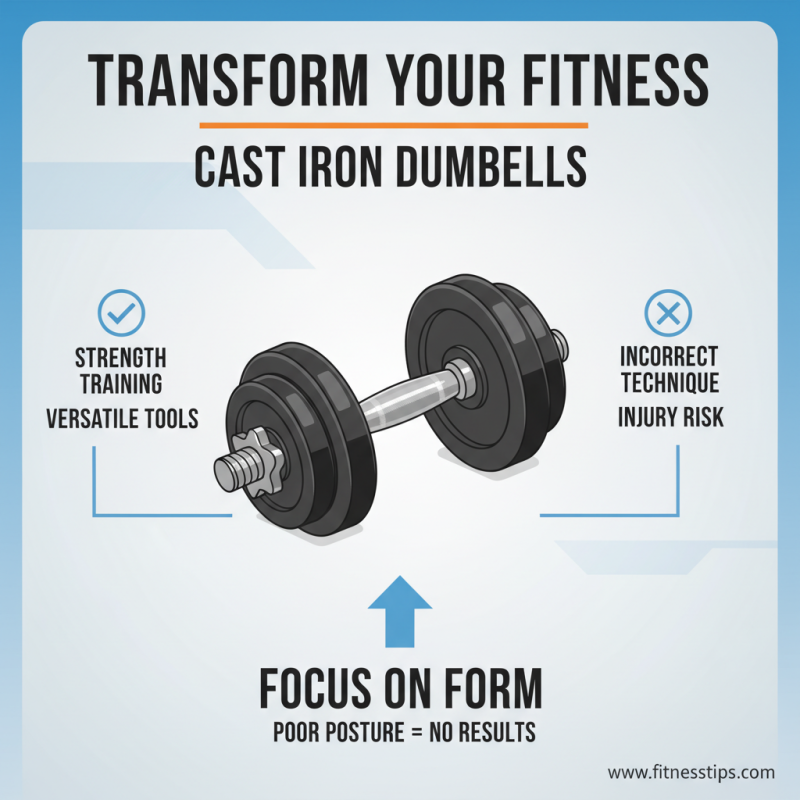
Incorporating cast iron dumbbells into your workout routine can transform your fitness journey. These versatile tools are great for strength training. However, wrong techniques may lead to injuries. Focus on form. Poor posture won't yield results.
Tip one: Start with lighter weights. This helps you master the movements. Many rush into heavier weights and end up straining muscles. Find a weight you can lift comfortably for multiple reps. Practice controlled motions, ensuring you completely engage each muscle group.
Tip two: Mix up your exercises. Don't just stick to bicep curls. Include lunges, squats, and deadlifts. This will challenge your body in new ways. That said, listen to your body. If something feels off, it might be time to reevaluate your approach. Implementing variety will keep your sessions exciting and effective.
Lastly, integrate dumbbells into different workout styles. Circuit training, HIIT, or even yoga can benefit. Each session should feel fresh. If it becomes mundane, you might lose motivation. Balance your routine with recovery days. Remember, progress takes time and reflection is key.
Maintenance Tips for Longevity of Cast Iron Dumbbells
Proper maintenance of cast iron dumbbells is crucial for ensuring their longevity. After each workout, wipe the dumbbells with a dry cloth. This helps to remove sweat and moisture, which can lead to rust. If you notice any rust spots, scrub them gently with fine steel wool. This can seem tedious, but it's necessary for preserving the dumbbells' integrity.
Storage is another vital aspect. Store them in a cool, dry place. Avoid leaving them in damp areas, like basements, which can accelerate corrosion. Using a small layer of oil can help protect the surface. A light coating can be enough, but not overwhelming. Remember to check them regularly for any signs of wear or damage. Small issues can escalate if not addressed quickly.
Lastly, be mindful of how you handle them. Dropping dumbbells can chip or crack them. It might seem like a minor mistake, but it can have lasting effects. Always return dumbbells to their designated spot after use. It fosters a good habit and helps maintain their condition. Attention to these maintenance tips is essential for keeping your cast iron dumbbells in top shape.