What is an Automatic Dumbbell and How Does it Work?
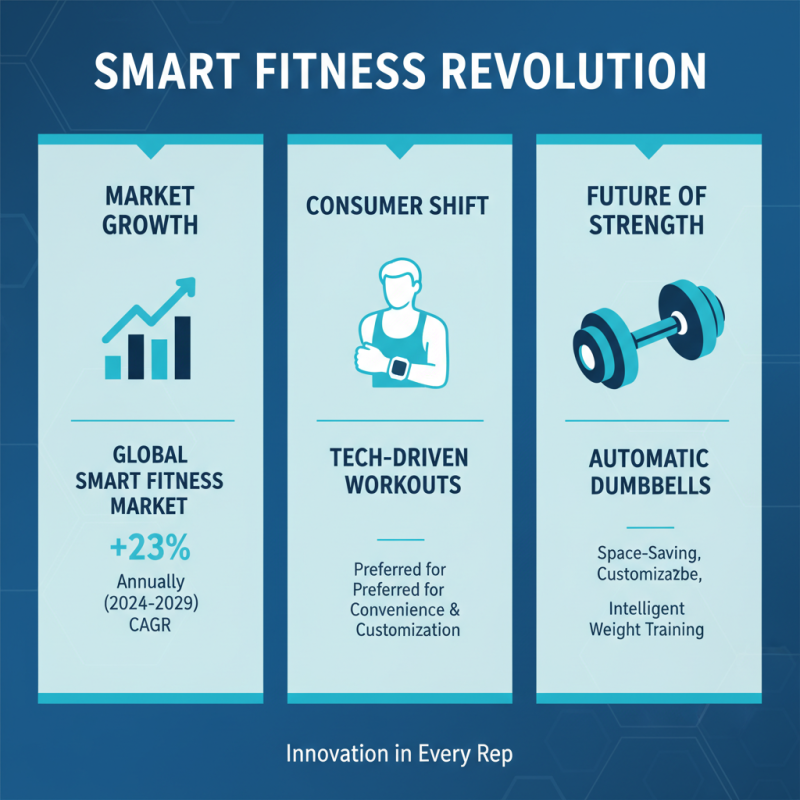
The Automatic Dumbbell is revolutionizing home workouts. This innovative fitness tool adjusts weight effortlessly. It offers versatility and convenience for users of all fitness levels.
Gone are the days of cluttered gyms filled with weights. An Automatic Dumbbell caters to your needs, often with a simple twist or button. Imagine quickly switching from 5 to 25 pounds during a workout. It makes strength training accessible and efficient.
However, this technology isn't without flaws. Some users report issues with weight calibration. Others miss the tactile feel of traditional weights. As we embrace automation, it’s essential to reflect on the balance between convenience and authenticity in our fitness journeys.
What Are Automatic Dumbbells and Their Key Features?
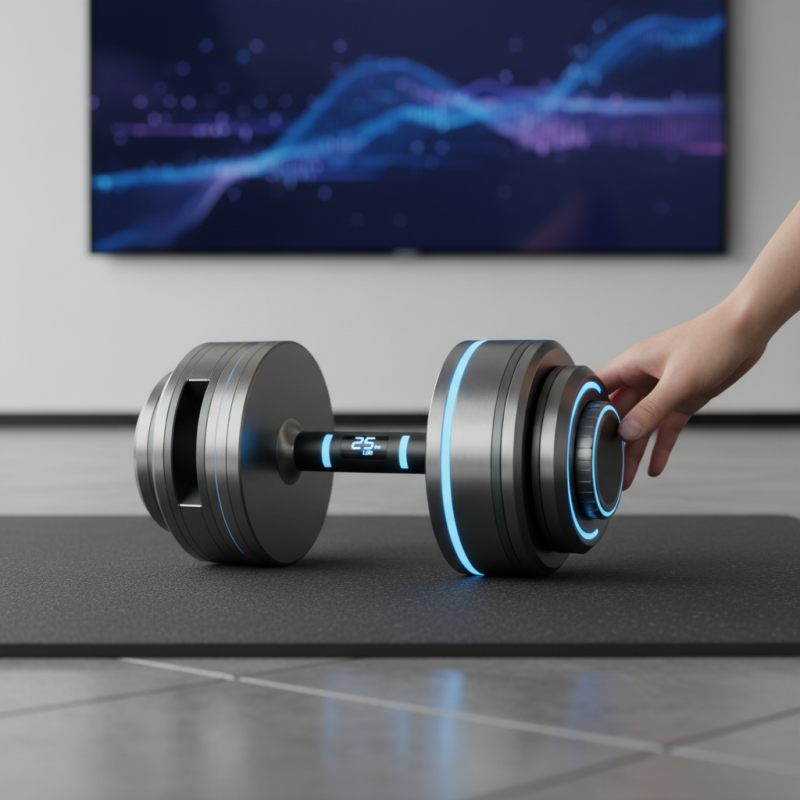
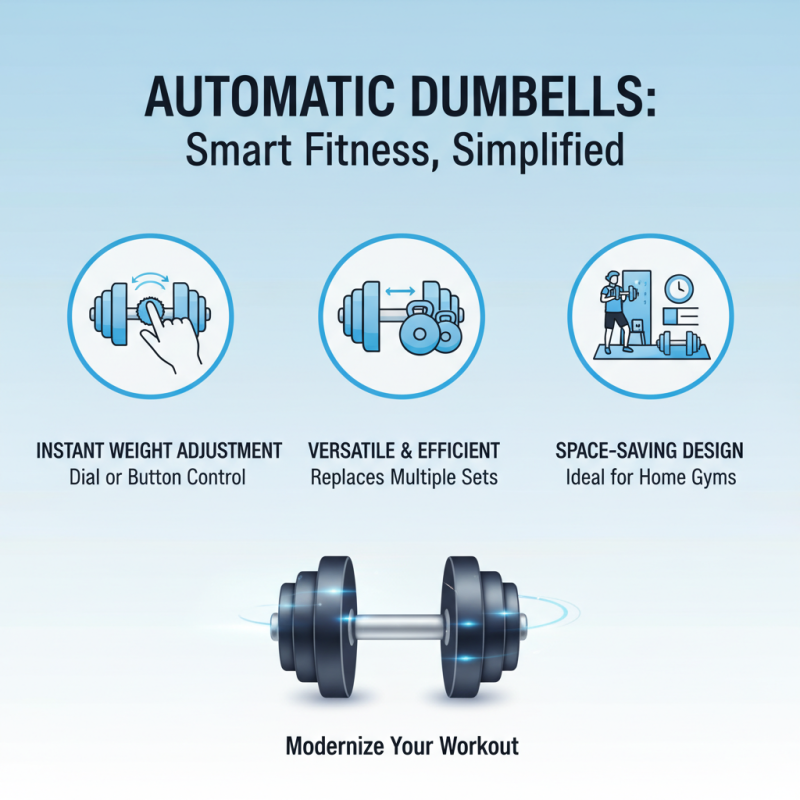
Automatic dumbbells are a modern fitness tool designed for convenience and efficiency. These weights adjust automatically to suit different exercises. Users can switch between different weights with just a turn of a dial or press of a button. This eliminates the need for multiple sets of dumbbells. With a compact design, they save space, making them ideal for home gyms.
Key features of automatic dumbbells include quick weight adjustments and a user-friendly interface. Many models offer a range between 5 to 50 pounds. Some even allow for incremental changes of 2.5 or 5 pounds for precise tuning. The design often includes a safety lock, ensuring weights won't shift during workouts.
However, not every user finds them completely satisfactory. Some struggle with the initial learning curve. They might not like the feel of the mechanism during lifts. Additionally, users sometimes desire a more traditional weight feel. It leads to reflections on whether convenience trumps the authenticity of weightlifting.
The Mechanism of Automatic Adjustment in Dumbbells
Automatic dumbbells have revolutionized the way we train at home. The mechanism behind their automatic adjustment is fascinating. Typically, these dumbbells use a system of plates and a locking mechanism. A user can simply select the desired weight by turning a dial. The dumbbell then automatically adjusts itself to fit that weight. This simplicity can save time and space.
The internal workings involve a smart design. When the weight is changed, the plates slide into place. This can happen in seconds, allowing for quick transitions between exercises. However, there can be limitations. Sometimes, the adjustment might not be as smooth as expected. Users may find they need to fiddle a bit. It’s essential to remain patient during this process. Unforeseen pauses can disrupt the flow of a workout.
Moreover, maintenance is another aspect that requires attention. Dust or debris can affect the mechanism's responsiveness. Regular cleaning is recommended. Some may overlook this until issues arise. The goal is to ensure a consistent and enjoyable workout experience. Ultimately, automatic dumbbells bring innovation, but they also demand a commitment to upkeep.
Automatic Dumbbell Weight Adjustment
This bar chart illustrates the number of users corresponding to different weight settings of automatic dumbbells. As the weight increases, the number of users decreases, indicating a preference for lighter weights among most users.
Comparing Traditional Weights with Automatic Dumbbells
Traditional weights have been the go-to for strength training for years. They require careful selection for each exercise. Users typically need a variety of dumbbells. This means using space and managing clutter. They can be heavy and hard to store.
Automatic dumbbells change the game. With a twist or a click, weights adjust to what you need. You can switch from 5 to 50 pounds easily. This offers a smooth workout flow. They save space and time. But adjustable mechanisms can sometimes be tricky. They may not respond as quickly as you hope.
Tip: Start slow when using automatic dumbbells. Familiarize yourself with their adjustments. Check your form often, as it can be easy to rush.
In contrast to traditional weights, users might find themselves relying too much on automation. This could lead to neglecting proper lifting techniques. Always ensure your body aligns with movements, even with modern devices. Keep challenging your routine.
Benefits of Using Automatic Dumbbells for Home Workouts
Automatic dumbbells are revolutionizing home workouts. They adjust weights automatically, providing flexibility. This technology encourages people who may be reluctant to lift weights. Research shows that 83% of home fitness enthusiasts seek adaptable equipment. Automatic dumbbells cater to this desire perfectly.
Using these dumbbells boosts workout efficiency. You can switch weights quickly, minimizing rest time. This is crucial for maintaining intensity. A study reports that shorter rest periods can improve muscle endurance by up to 25%. Additionally, automatic dumbbells are space-saving. They offer multiple weight options without cluttering your living space.
However, some drawbacks exist. While they provide convenience, the reliance on technology can be an obstacle. Users may find it hard to adjust mentally. Moreover, not every workout can benefit from weight changes. Some exercises require consistent weight for stability. Thus, it’s essential to evaluate when to use them for maximum impact.